
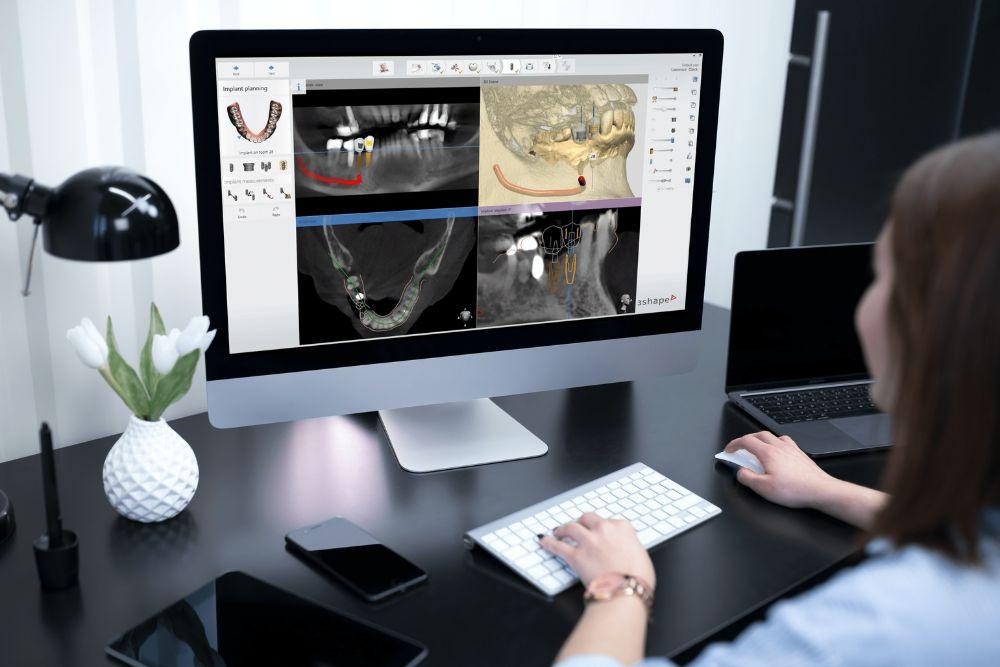

One of the most challenging aspects of obtaining dental implants is surgery. However, the reality is that the events in surgical rooms are far more significant. Thus, emphasizing the importance of dental implant planning.
This stage assesses the placement of your implant and its compatibility with your bone anatomy. Also, whether this will endure for many years or lead to issues later.
By utilizing digital planning as well as 3D imaging for implant placement. Dentists from the implant team at Lake Park Dental can precisely identify the positions of sinuses and nerves.
They are able to assess the bone density. They can also determine the ideal angle before executing any cuts. This degree of specificity prevents issues and lays the foundation for lasting success.
Surgery is simply adhering to the plan. If the strategy is hurried or unfinished. Flawless surgical technique can’t correct inadequate positioning. Understanding the preparation of your procedure offers you greater control over the results of your treatment.
3D CBCT Scanning
A Cone Beam Computed Tomography is a sophisticated three-dimensional imaging technique. It offers an exceptionally detailed perspective of your jawbone, teeth, nerves, and adjacent structures.
In contrast to conventional 2D X-rays, which produce a flat image. Know that this technology provides a complete view.
Thus, enabling experts to visualize every angle of bone before preparing your dental implant placement. This guarantees that your treatment relies on precise information rather than speculation.
The Importance
Some experts encounter individuals who have received treatment somewhere. Regrettably, they could not assist him as his implant had breached the sinus cavity, for instance. It is a clear sign that it was inserted in a delicate area of his bone. This shows that it’s lacking proper preparation.
This scenario serves as a reminder that a 3D CBCT is not simply an optional addition. It’s an essential step in secure and reliable dentistry.
Before selecting a location for your procedure, always verify:
- A 3D CBCT scan will be used for your examination instead of a regular X-ray.
- Professionals will individually examine and talk about the image scanning with you before treatment.
- You comprehend what the image reveals. Indeed, it’s your entitlement to be informed.
Check out https://www.fda.gov/radiation-emitting-products/medical-x-ray-imaging/dental-cone-beam-computed-tomography for more info.
How It Works
- Consultation
A dentist conducts an oral exam. He examines your 2D X-ray to obtain a comprehensive understanding.
Your consultation begins with a comprehensive examination. This is where a professional examines your entire medical history. This assists in recognizing any health issues that could influence the success of the procedure. For example, heart disease or diabetes.
In the thorough assessment, your dentist examines your gum condition. Also, bone density and other current procedures.
They search for indications of infections or gum disease requiring treatment primarily. You will talk about the medications you are taking, as some may influence the healing process.
Your dentist inquires about your aspirations and expectations. This discussion aids them in grasping your desires for your new teeth. They will clarify what is feasible considering your unique circumstances.
- 3D CBCT Scan
Cutting-edge imaging methods provide experts with a comprehensive perspective of your jaw anatomy. Traditional dental X-rays deliver fundamental information. But CBCT scans present significantly greater detail.
This generates 3D images of your jawbone, sinus cavities, and nerves. This also reveals the precise amount of osseous present and the locations of essential structures.
Your dentist utilizes cone-beam computed tomography to assess framework quality. As well as to locate the best areas for your placement.
Digital planning software enables them to determine the precise depth and angle for every endosteal post. This diagnostic tool assists in avoiding nerves. It guarantees that implants adequately support your new teeth.
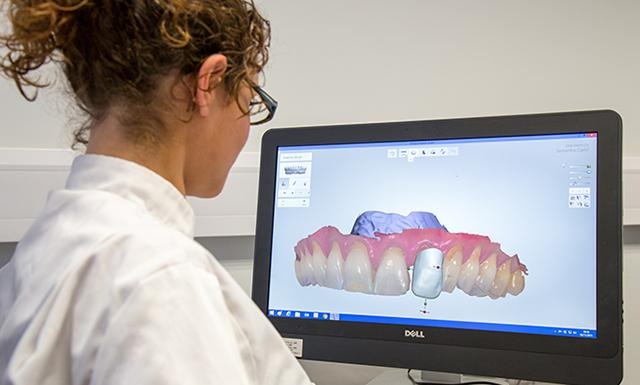
- Digital Implant Preparation
Utilizing the 3D scan information, experts determine the optimal location, dimensions, and angle. Thus, guaranteeing superior stability and a natural appearance.
Your dentist integrates all the details from your examination. As well as the scans, to create your surgical plan. They determine the number of implants required. Also, the optimal locations for placement to achieve the best outcomes.
The customized plan specifies the type of endosteal post ideal for your bone structure. Your dentist thinks about the appearance and functionality of your teeth.
They develop surgical guides from digital planning. This is to guarantee accurate positioning during the surgery.
A timeline will be provided that outlines each treatment phase. This encompasses all necessary grafting, recovery, and the timeline for receiving your permanent teeth.
- Secure, Directed Surgery
Through accurate digital preparation, surgery is expedited, more precise, and minimally invasive. Therefore, resulting in an easier recovery and enduring outcomes.
But if you are a smoker, click this to learn more.
Conclusion
Thorough planning establishes a guide for your complete treatment. A specialist assesses your bone density, bite alignment, and gum condition. This is to decide the precise positioning.
By neglecting adequate planning, implants could be located at an incorrect depth or angle. This may result in an unpleasant bite or failure.
Research indicates that thorough preparation during consultations results in improved success rates. That’s because possible issues are recognized prior to the start of surgery.
Your dentist employs planning to determine if you require further procedures initially. For example, bone grafts or gum disease treatment before dental implants.